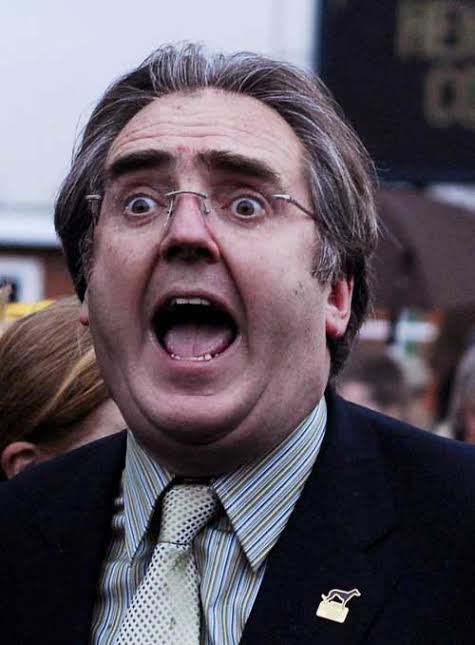
Who is Harry Findlay?
Harry Findlay is a British professional gambler, sports bettor and former racehorse owner whose career has combined spectacular wins, severe losses and an unusually public enthusiasm for betting. He is best known in racing as the co-owner of Denman, winner of the 2008 Cheltenham Gold Cup, and to a wider sporting audience as a forceful advocate for punters and betting exchanges.
Findlay does not fit the image of the quiet statistical syndicate operator. His public persona is emotional, outspoken and intensely competitive. He has described gambling not simply as a source of income but as the organising passion of his life. That candour has made him one of the most compelling—and polarising—figures in modern British betting.
His record is also a warning against reducing a gambler’s life to a list of famous winning bets. Findlay has spoken of winning millions, staking seven-figure sums and identifying outstanding sporting talent early. He has also endured crushing reversals, financial difficulty and bankruptcy. His story is therefore less a simple success manual than a study of conviction, risk, temperament and the difference between being right and protecting capital.
Early life, greyhounds and the first attraction of betting
Findlay was born on 20 January 1962 and grew up in Berkshire, commonly associated with the High Wycombe area. He left school at sixteen and became immersed in greyhound racing at a young age. Published profiles describe early work around kennels and a brief period working for a bookmaker, although he was temperamentally more comfortable cheering for the punter than guarding the bookmaker’s margin.
Greyhound racing gave him a practical education. Track position, early pace, grading, kennel information and the physical condition of individual dogs could matter enormously. A regular racegoer might acquire an edge by watching closely and understanding details not fully reflected in the market.
He also developed an appetite for the social side of betting: the ring, the argument, the rush of taking a price and the public test of judgment. Unlike a bettor who regards wagering as a detached investment exercise, Findlay has often spoken as though the contest itself is inseparable from the appeal.
His nickname, “Harry the Dog”, reflects that deep association with greyhound racing. Even after his name became linked with elite racehorses and huge sports wagers, the dogs remained central to his identity.
From racecourse regular to professional punter
A professional gambler must solve two separate problems: finding bets with positive expected value and surviving the inevitable periods when results go against them. Findlay built his reputation by forming very strong opinions and backing them at substantial stakes. He wagered across horse racing, greyhounds, football, cricket, rugby, tennis and other sports rather than restricting himself to one market.
Betting exchanges were particularly important to his career. Exchanges allowed customers to back selections, lay them, trade positions and request prices directly from other customers. Findlay became one of Betfair’s most visible high-volume clients and at one stage described himself as a “walking advert” for the exchange.
His approach differed from the computer-model style associated with Bill Benter or Zeljko Ranogajec. Findlay’s edge was portrayed more as a combination of obsessive sports knowledge, trusted contacts, rapid judgment and the courage to act decisively when he believed the market was wrong.
That courage could be immensely profitable. It could also create extreme volatility. A bettor may possess good information and still lose because an athlete underperforms, a horse meets trouble, weather changes a match or an apparently strong position was already built into the price.
Harry Findlay’s betting style and philosophy
Findlay became famous for backing short-priced favourites with unusually large sums. The casual punter often dislikes odds-on prices because the potential profit appears small beside the stake. A professional sees the question differently: is the true probability greater than the probability implied by the odds?
Why an odds-on bet can still represent value
Decimal odds of 1.50 imply a probability of about 66.7%. If a bettor has sound reason to believe the real chance is 75%, the price may offer value despite being odds-on. The difficulty is that losing one £100,000 bet costs the whole £100,000, while a winning bet at 1.50 earns only £50,000 profit. Accurate pricing and disciplined stake sizing are therefore essential.
Findlay’s public philosophy emphasises conviction. When he believes a selection is substantially overpriced, he is willing to stake at a level most bettors would find psychologically impossible. He has also spoken admiringly of elite competitors whose mentality, fitness or talent he believed the market had underestimated.
However, conviction is not certainty. Even an excellent bet can lose. A sound betting operation normally limits the proportion of bankroll exposed to a single result. Findlay’s career illustrates both sides: the wealth that can be created by acting boldly and the damage caused when too much depends on one outcome.
Read more: price, probability and bankroll risk
A good selection is not automatically a good bet. A horse with a 50% chance is attractive at odds of 3.00 but unattractive at 1.50. Professional betting begins with an estimate of probability and then asks whether the available odds compensate for uncertainty.
Stake size is a separate decision. Even where the bettor estimates a positive edge, the estimate may be wrong. Diversification and fractional staking reduce the chance that one error or unlucky event destroys the bankroll.
Findlay’s famous bets are memorable because they were large and dramatic. The quieter lesson is that long-term survival depends on managing losing runs as carefully as identifying winners.
Greyhound racing and “Harry the Dog”
Greyhound racing was Findlay’s first great sporting obsession. He owned dogs, followed the sport closely and became strongly associated with both track racing and coursing. One of his best-known greyhounds was Big Fella Thanks, winner of the 1999 Irish Coursing Derby. Findlay later used the same name for a racehorse.
His affection for the sport has remained visible in interviews long after greyhound racing’s decline from its former place in British popular culture. He has argued that racing administrators and betting operators should create a healthier product for punters, including more competitive pool deductions and a better relationship between betting turnover and the sports that generate it.
Greyhound betting also helps explain his preference for close observation and specialist knowledge. In a market with fewer mainstream analysts than Premier League football or major tennis, a dedicated follower may believe there is more opportunity to know something the average price does not.
Denman, Paul Nicholls and the 2008 Cheltenham Gold Cup
Findlay’s place in racing history is inseparable from Denman. He co-owned the powerful staying chaser with Paul Barber, and the horse was trained by Paul Nicholls. Denman’s combination of size, relentless galloping and bold jumping made him one of the defining National Hunt horses of his generation.
Denman developed from an unbeaten novice hurdler into a dominant novice chaser. He won all five starts during his first season over fences, including the Royal & SunAlliance Chase at the 2007 Cheltenham Festival. Findlay backed the horse with characteristic confidence and later recalled one early Denman wager as the easiest £33,000 he had won.
The peak came in the 2008 Cheltenham Gold Cup. The race was framed as a confrontation with stablemate and defending champion Kauto Star. Denman’s strength was stamina, and his connections wanted the race to become a searching test rather than a tactical sprint. Ridden by Sam Thomas, he applied sustained pressure and defeated Kauto Star to give Findlay and Barber the sport’s most prestigious steeplechase.
Denman also won the Hennessy Gold Cup at Newbury twice, carrying 11st 12lb on both occasions. Those victories reinforced his reputation as an exceptional weight-carrying chaser. A heart problem interrupted his career after the Gold Cup, but he returned to top-level competition and remained a public favourite until retirement.
Findlay’s relationship with Denman was intensely emotional. The horse represented more than an asset or betting vehicle: he was the embodiment of courage and commitment that Findlay admired in sport. Denman died in 2018 at the age of eighteen, prompting tributes across racing.
The Gullible Gordon lay-betting case
In 2010 Findlay became involved in one of British racing’s most discussed disciplinary cases. Owners were prohibited from laying their own horses to lose. A British Horseracing Authority panel found breaches involving lay bets against Gullible Gordon at Exeter in October 2008 and Chepstow in October 2009.
The context was unusual. Findlay had also backed the horse to win and, according to the case as reported, stood to make substantially more from victory than defeat. The lay bets altered or reduced his overall financial position rather than creating a simple incentive for the horse to lose. Nevertheless, the rule was strict: an owner must not lay a horse in which they have an ownership interest.
The original disciplinary panel imposed a six-month disqualification. Findlay appealed. In July 2010 the appeal board quashed the disqualification and substituted a £4,500 fine, corresponding to the amount by which the relevant lay betting improved his position when Gullible Gordon won at Chepstow.
The appeal did not declare the conduct permissible; the admitted rule breaches remained. Its significance was proportionality. The case generated debate about whether the original punishment properly reflected Findlay’s net betting position, the absence of evidence that the horse had not been trying and the treatment of comparable offences.
For Findlay, the episode caused lasting bitterness toward racing’s authorities. It also offers a clear compliance lesson: hedging may appear economically logical, but owners and licensed participants must understand rules that apply independently of their overall intention or net exposure.
Big wins, severe losses and bankruptcy
Findlay has publicly discussed lifetime gambling wins measured in many millions of pounds. Interviews and profiles also recount enormous individual wagers, including stakes running into seven figures. Precise totals are difficult to verify because turnover, gross winnings and retained profit are different measures, and private betting accounts are not publicly audited.
His career included devastating losses as well as victories. One widely reported episode involved a multimillion-pound reversal on a rugby match involving New Zealand. Findlay has also described occasions when a single result radically changed his financial position.
He was declared bankrupt in 2013. That fact complicates simplistic claims about his “net worth”. A gambler may have won £20 million cumulatively yet retain far less after losing bets, living costs, ownership expenses or business liabilities. Gross winnings are not the same as wealth.
Findlay’s openness about these reversals is one reason his story resonates. He does not present gambling as a smooth compounding process. His life has featured euphoria, desperation, recovery and renewed risk. For readers interested in betting strategy, the central caution is that an edge cannot compensate for unlimited exposure.
Gambling For Life and media appearances
Findlay’s autobiography, Gambling For Life, written with sports journalist Neil Harman, was published in 2017. The book recounts his upbringing, gambling career, racehorse ownership, famous bets and financial swings. It was longlisted for the William Hill Sports Book of the Year.
The title is revealing. For Findlay, gambling is not an occasional recreation added to an otherwise conventional life. It is the thread connecting his relationships, travel, sporting memories, financial decisions and public identity.
He has since appeared regularly in podcasts, racing programmes and long-form interviews. His style is direct, anecdotal and often controversial. He speaks about odds and sporting judgment but also criticises affordability checks, regulation and policies that he believes make it harder for serious punters to bet.
Those arguments should be separated from his personal record. Findlay can offer unusual insight into high-stakes betting while also representing a risk tolerance that would be unsuitable for most people. Admiring his knowledge does not require copying his staking.
What can bettors learn from Harry Findlay?
The positive lessons are clear. Specialise deeply, seek prices rather than merely winners, study competitors beyond surface statistics and be prepared to act when your estimate differs materially from the market. Findlay’s enthusiasm also demonstrates the value of genuine subject knowledge: he watches sport because he loves it, not merely because a model produces a signal.
The warnings are equally important. Do not confuse confidence with immunity from variance. Do not measure success by the size of a winning screenshot or by lifetime gross winnings. Protect the bankroll, understand legal and regulatory restrictions, and remember that the emotional need for action can undermine even a knowledgeable bettor.
Findlay is compelling precisely because both sets of lessons exist in the same career. He has experienced the dream of owning a Gold Cup winner and the reality of financial collapse. Any balanced biography must include both.
Harry Findlay career timeline
- 1962 — Born in BerkshireHarry Findlay is born on 20 January and grows up in the High Wycombe area.
- Late 1970s — Leaves school and enters greyhound racingBecomes immersed in kennels, tracks and betting, laying the foundations for the nickname “Harry the Dog”.
- 1980s and 1990s — Develops as a professional gamblerBets across greyhounds, horse racing and an expanding range of sports.
- 1999 — Big Fella Thanks wins the Irish Coursing DerbyOne of Findlay’s most celebrated greyhound successes.
- 2007 — Denman becomes a leading novice chaserWins at the Cheltenham Festival and establishes himself among the best staying prospects in training.
- 2008 — Cheltenham Gold Cup victoryDenman defeats Kauto Star, giving Findlay and Paul Barber a landmark ownership success.
- 2010 — BHA disciplinary case and successful appealA six-month disqualification for lay betting against Gullible Gordon is quashed and replaced with a £4,500 fine.
- 2013 — BankruptcyFindlay is declared bankrupt after a career marked by very large financial swings.
- 2017 — Gambling For LifeHis autobiography with Neil Harman is published and longlisted for a major sports-book award.
- 2020s — Commentator and interview guestContinues discussing betting, racing regulation, greyhounds and the rights of punters in long-form media appearances.
Harry Findlay compared with other famous punters
| Punter | Core markets | Publicly associated approach | Distinctive reputation |
|---|---|---|---|
| Harry Findlay | Horse racing, greyhounds and multiple sports | Strong opinions, large stakes and aggressive backing of perceived value | Outspoken high-stakes gambler and co-owner of Denman |
| Barney Curley | Horse racing | Patient preparation and coordinated betting coups | Mastermind of the Yellow Sam coup and other carefully planned gambles |
| JP McManus | Horse racing and business | Private, relationship-driven and long-term | Major owner, businessman and respected racing figure |
| Alex Bird | Horse racing and photo finishes | Track observation, timing and specialisation | Old-school professional punter famed for identifying close finishes |
| Bill Benter | Hong Kong horse racing | Computer modelling and probability estimation | Quantitative pioneer whose methods resembled systematic trading |
These descriptions summarise public reputations. Each bettor’s actual methods changed over time and were more complex than a single label suggests.
Frequently asked questions
Who is Harry Findlay?
Harry Findlay is a British professional gambler and former racehorse owner. He is known for high-stakes sports betting, his lifelong involvement with greyhound racing and his part-ownership of Cheltenham Gold Cup winner Denman.
How old is Harry Findlay?
Harry Findlay was born on 20 January 1962. He turned 64 in January 2026.
Did Harry Findlay own Denman?
Yes. Findlay co-owned Denman with Paul Barber. Trained by Paul Nicholls, Denman won the 2008 Cheltenham Gold Cup and the Hennessy Gold Cup in 2007 and 2009.
Why is Harry Findlay called Harry the Dog?
The nickname reflects his lifelong passion for greyhound racing. He began following and working around greyhounds when young and remained closely associated with the sport throughout his betting career.
Why was Harry Findlay banned from racing?
A BHA panel imposed a six-month disqualification in 2010 after he admitted breaches involving lay bets against his own horse, Gullible Gordon. The appeal board later quashed the disqualification and replaced it with a £4,500 fine.
What is Harry Findlay’s betting strategy?
Findlay is associated with deep sporting knowledge, strong personal judgment and placing very large bets when he believes the odds offer value. He has frequently backed short-priced favourites heavily rather than seeking only outsiders.
What was Harry Findlay’s biggest bet?
Profiles and interviews have described several seven-figure stakes, including a reported £2.5 million wager. Because private account records are unavailable and stories are often told in terms of turnover rather than net risk, claims about one definitive “biggest bet” should be treated cautiously.
What is Harry Findlay’s net worth?
No reliable current figure is publicly verified. Findlay has discussed very large lifetime winnings, but he has also suffered major losses and was declared bankrupt in 2013. Gross winnings should not be treated as retained personal wealth.
What is Harry Findlay’s book called?
His autobiography is Gambling For Life, written with Neil Harman and published in 2017. It was longlisted for the William Hill Sports Book of the Year.
Sources and further reading
This profile uses official disciplinary records and established racing journalism. Large personal betting figures are described as reported claims where they cannot be independently audited.
- British Horseracing Authority, “Owner Harry Findlay disqualified following Disciplinary Panel enquiry” (11 June 2010).
- British Horseracing Authority, “Harry Findlay: Appeal Board result and reasons” (15 July 2010).
- The Guardian, profile interview with Harry Findlay (13 September 2017).
- The Guardian, reporting on the BHA appeal and replacement £4,500 fine (15 July 2010).
- Racing Post, retrospective features on Denman and extracts from Gambling For Life.
- Harry Findlay with Neil Harman, Gambling For Life (2017).